2026 Best Putlog Scaffolding for Global Buyers

Time:2026-09-11 Author:Isabella
0%

For global buyers, choosing the best Putlog Scaffolding in 2026 requires more than comparing prices. Site conditions, material quality, loading requirements, and supplier support all influence safe performance. A reliable system should fit brickwork, stonework, or concrete construction without forcing workers to improvise.

Dr. John H. Ratay, a respected temporary-structures engineer and author, offers a valuable principle: “Temporary structures deserve permanent attention.” That idea matters here. Putlog Scaffolding may look simple, yet every putlog, ledger, standard, and platform affects stability. A small mismatch can create movement under a loaded platform. That detail is easy to underestimate.

Real projects reveal the difference.

Experienced buyers inspect steel thickness, weld quality, corrosion protection, and connection accuracy. They also request load calculations, inspection records, product traceability, and installation guidance. Local climate matters too. Coastal humidity, strong winds, freezing temperatures, and uneven ground can change equipment performance.

This guide examines practical options for international procurement. It considers modular designs, traditional timber-compatible systems, adjustable components, and supplier reliability. The comparison is not perfect. Product specifications may vary between manufacturers, and marketing language can hide important limitations. Buyers should verify every critical claim with qualified engineers and applicable local standards.

A strong purchase decision protects more than the budget. It supports safer assembly, steadier work platforms, fewer delays, and clearer responsibility across the project. For 2026, the best Putlog Scaffolding is not simply the cheapest system. It is the system that performs predictably when real construction becomes difficult.
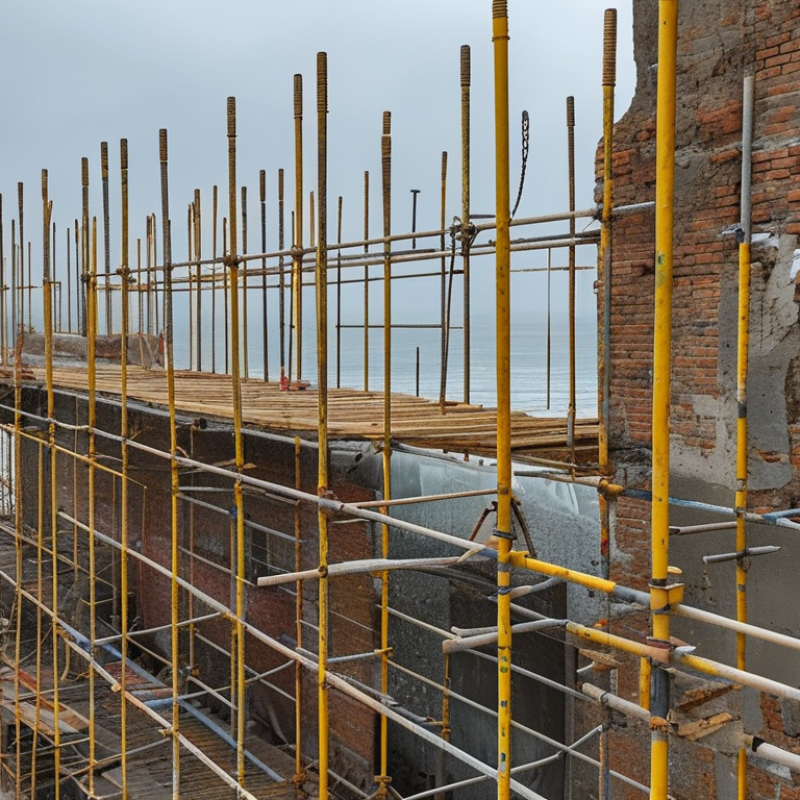
2026 Best Putlog Scaffolding for Global Buyers

Putlog Scaffolding: Definition, Structure, and Core Components

2026 Best Putlog Scaffolding for Global Buyers

Putlog scaffolding is a traditional support system for masonry and façade work. It usually has one row of vertical standards beside the building. Horizontal ledgers connect those standards. Putlogs extend from the ledger into prepared wall openings. Their outer ends support scaffold boards or metal decking. It is not fully self-supporting. The wall must carry part of the platform load.

Core components include standards, ledgers, putlogs, transoms, base plates, braces, guardrails, toe boards, platforms, and couplers. Base plates spread loads across firm ground. Braces control sway during wind or movement. Guardrails and toe boards reduce fall and falling-object risks. Under BS EN 12811-1, temporary works should be assessed for structural performance, service loads, and platform use. Small design errors can become serious.

The U.S. Occupational Safety and Health Administration estimates that about 2.3 million construction workers use scaffolds routinely. Its scaffold safety data also estimates 4,500 injuries and 50 deaths annually. These figures are estimates, not a complete global census. Buyers should verify load class, steel quality, weld consistency, dimensions, and inspection records. Wall condition matters too. A weak or unfinished wall may not safely receive putlogs. In practice, this point is sometimes overlooked. Details matter. A competent engineer should confirm the layout, tie pattern, foundation, and local compliance before installation.

How Putlog Scaffolding Works on Different Building Projects

2026 Best Putlog Scaffolding for Global Buyers

How Putlog Scaffolding Works on Different Building Projects

Putlog scaffolding uses horizontal putlogs to support working platforms beside a wall. One end rests in prepared wall openings, while the outer end connects to a row of standards. This arrangement reduces material use and leaves more ground space for workers and deliveries. It works particularly well during brickwork, blockwork, and low-rise construction.

On a small masonry project, putlogs can move upward as the wall rises. Workers install platforms near the active course, then remove or reposition the supports later. During building renovation, the system may fit narrow streets or courtyards better than a fully independent scaffold. However, old walls can contain loose bricks, hidden cracks, or weak mortar. The opening may look sound but still fail under load.

Practical site planning matters. A competent person should verify wall strength, platform width, spacing, load limits, access, guardrails, and stability ties. Local regulations and inspection procedures also apply. For façades with large windows, fragile finishes, or no suitable openings, independent scaffolding is often safer. Putlog scaffolding is not a universal solution. That limitation matters.

Weather changes the risk. Wind can shift unsecured boards, and rain can reduce footing stability. Regular inspections should follow storms, alterations, and long work pauses. In practice, crews sometimes focus on speed and overlook small gaps around putlogs. That shortcut deserves review before materials and people reach the platform.

Key Safety, Load, and Compliance Requirements for 2026

2026 Best Putlog Scaffolding for Global Buyers

Key Safety, Load, and Compliance Requirements for 2026

Putlog scaffolding needs more than straight tubes and tight couplers. Its inner ends rely on suitable wall openings or approved supports, so masonry strength must be checked before installation. A competent person should confirm base plates, level standards, platform width, guardrails, toe boards, and safe access. Small gaps matter. A dropped tool can expose weak housekeeping.

Load planning is equally important. Buyers should request a documented design showing working-load limits, bay dimensions, tie patterns, and platform spacing. Do not treat every platform as heavy-duty. Bricks, mortar tubs, and workers can quickly exceed a light-duty rating. Keep materials evenly distributed, and never add unapproved sheeting, hoists, or extra levels. Wind changes the risk. The structure may need additional ties or temporary restrictions during severe weather.

Compliance depends on the installation country, project type, and local authority. Confirm applicable standards before purchasing, then retain certificates, inspection records, assembly instructions, and component traceability. Inspect the scaffold after erection, alteration, impact, and unusual weather. A digital checklist can help, but it cannot replace a qualified inspection. In practice, rushed handovers remain a common weakness. The ideal specification may look clear on paper, yet site conditions can differ. Allow room for correction, independent review, and honest reporting when the design no longer matches reality.

How Global Buyers Should Compare Putlog Scaffolding Suppliers

2026 Best Putlog Scaffolding for Global Buyers

Global buyers should compare putlog scaffolding suppliers by evidence, not catalog photos. Start with the tube, coupler, putlog, and board specifications. Ask for steel grade, corrosion protection, dimensional tolerances, and maximum working loads. Reliable suppliers provide current drawings, test reports, inspection records, and clear batch traceability. Documents matter. Yet documents alone cannot prove site performance.

Check whether the supplier designs systems for your local construction rules. Requirements differ between markets. Request samples before placing a large order. Examine weld consistency, fitting movement, surface finish, and connection strength. A practical trial assembly can reveal awkward locking points or unstable joints. These details are easy to miss online.

I would not treat a low price as a clear advantage. Cheaper components may increase labor, replacement, and inspection costs.

Compare production capacity, quality-control staff, packaging, and delivery planning. Ask how the supplier handles damaged parts, revised drawings, and technical questions across time zones. Clear answers are valuable. Confirm load calculations for the intended height, spacing, ties, access points, and weather exposure. The supplier should explain assumptions instead of hiding behind general claims.

Also review installation guidance and worker training materials. Some evaluations focus too heavily on steel weight. That can be a mistake. Usability, fit accuracy, and consistent supply often affect project safety and schedule more than a small price difference. Leave room for independent inspection, because no supplier relationship should replace verification.

Purchasing, Shipping, Installation, and Maintenance Considerations

2026 Best Putlog Scaffolding for Global Buyers

Purchasing, Shipping, Installation, and Maintenance Considerations

For global buyers, choosing putlog scaffolding starts with job conditions, not catalogue photographs. Confirm tube dimensions, load classes, platform widths, and compatible fittings with a qualified engineer. Ask for material certificates, weld inspection records, and a clear inspection procedure. A low purchase price can hide costly replacement parts. Request spare couplers, pins, base plates, and written packing lists before payment. My practical warning: specifications are often read too late.

Shipping needs measured bundles, gross weight, and stackable packing details. Use moisture-resistant wrapping, edge protection, and visible lifting points for long-distance transport. Agree on delivery terms, insurance responsibilities, customs documents, and site access with the logistics team. Port delays can damage schedules. Leave time for unloading, counting, and checking bent tubes or missing fittings. Photograph every bundle when received.

Installation should follow an engineered layout, firm foundations, proper ties, guardrails, and safe access. A competent supervisor must check plumb, spacing, bracing, and deck security before use. Do not improvise with damaged tubes. During use, inspect after severe weather, impact, alteration, or extended inactivity. Remove corrosion, replace distorted parts, and record each inspection date. One weakness remains: maintenance plans often exist on paper only. Crew training and simple checklists make them more credible.

2026 Best Putlog Scaffolding for Global Buyers - Purchasing, Shipping, Installation, and Maintenance Considerations

Category Data Dimension Typical Specification or Range Why It Matters to Global Buyers Verification or Purchasing Advice
Product Structure Putlog function A horizontal scaffold member that supports scaffold boards and normally has one end supported by the scaffold and the other end placed in or against the building structure. The putlog transfers platform loads and helps define the working-bay depth. Confirm whether the product is a traditional putlog, a transom, or a proprietary system component before ordering.
Product Structure Common material Hot-dip galvanized structural steel is commonly selected for outdoor use; painted steel may be suitable for controlled environments. Galvanizing improves resistance to atmospheric corrosion and reduces maintenance compared with unprotected steel. Request the steel grade, coating method, coating thickness or mass, and applicable test documentation.
Product Structure Typical tube outside diameter Approximately 48.3 mm is widely used for tube-and-fitting scaffolding components; other systems may use different dimensions. Diameter compatibility affects couplers, fittings, ledgers, standards, and replacement parts. Match the tube diameter and wall thickness with the complete scaffold system and local standard.
Product Structure Common putlog lengths Typical manufactured lengths range from about 0.6 m to 3.0 m, with project-specific lengths available depending on the system. Length determines bay spacing, platform width, material quantity, and shipping volume. Prepare a length schedule based on façade geometry, platform width, access requirements, and structural calculations.
Load and Safety Platform duty classification Common scaffold service classes are approximately 0.75, 1.50, 2.00, 3.00, and 4.50 kN/m², depending on the governing standard and intended work. The required class must cover workers, tools, materials, impact effects, and any temporary storage. Do not select a putlog from load class alone; verify span, spacing, deflection, connections, and the full scaffold design.
Load and Safety Design responsibility A competent scaffold designer or engineer should determine bay spacing, tie pattern, bracing, platform loading, wind exposure, and foundation requirements. Scaffold safety depends on the assembled structure, not on an individual putlog component. Obtain design drawings, calculations where required, and approval under the destination country's regulations.
Standards Applicable standards Relevant frameworks may include EN 12811-1, EN 39, BS 2482, OSHA requirements, ANSI/ASSP requirements, or local scaffold regulations, depending on the market. Standards cover materials, dimensions, loading, testing, erection, inspection, and use. Identify the destination-market standard before requesting quotations; standards are not automatically interchangeable.
Purchasing Quantity calculation Quantity depends on façade length, lift height, bay length, platform width, access points, openings, corners, loading bays, and spare-part allowance. Under-ordering causes delays; over-ordering increases capital cost and freight cost. Use a component take-off schedule and normally include a small replacement allowance for wear, loss, or site damage.
Purchasing Quality documentation Typical documents include product drawings, material certificates, coating records, dimensional inspection reports, load test records where applicable, and packing lists. Documentation supports customs clearance, quality control, project approval, and future traceability. Make required documents contractual and check that descriptions, quantities, and dimensions match the shipment.
Purchasing Pre-shipment inspection Inspection should cover length, diameter, wall thickness, weld quality, straightness, surface condition, coating coverage, marking, and quantity. Early inspection reduces the risk of receiving incompatible or damaged components. Use an agreed inspection checklist and sampling plan, with photographs and nonconformity records.
Shipping Packaging method Steel putlogs are commonly bundled, strapped, separated where needed, and protected against movement, moisture accumulation, and sharp-edge damage. Good packaging limits deformation, coating damage, corrosion, and unloading hazards. Specify bundle weight, bundle dimensions, lifting points, corrosion protection, labels, and maximum safe stacking height.
Shipping Container planning Long, straight components are generally packed to optimize container length; the final quantity depends on bundle diameter, length mix, weight limits, and loading method. Steel is dense, so payload limits may be reached before the available internal volume is fully used. Request a container-loading plan showing gross weight, net weight, cubic volume, bundle count, and axle or road restrictions.
Shipping Trade and customs information Commercial invoice, packing list, bill of lading or equivalent transport document, origin information, and the correct customs classification may be required. Incorrect documents can cause customs delays, additional costs, or inspection problems. Confirm import duties, taxes, treatment of wooden packaging, and destination-specific labeling with a customs broker.
Installation Erection sequence A typical sequence is foundation preparation, base installation, standards and ledgers, putlogs and platforms, bracing, ties, edge protection, access, and progressive inspection. Progressive erection helps maintain stability and provides controlled access for workers. Follow the approved method statement and manufacturer or engineer instructions; do not improvise missing components.
Installation Platform and edge protection Working platforms normally require properly supported decking, guardrails, intermediate protection where required, toe boards, safe access, and control of gaps. These measures reduce fall risks and prevent materials from falling from the platform. Apply the stricter requirement where local law, project specifications, or site conditions differ.
Installation Inspection frequency Scaffolding should be inspected by a competent person before first use, after alteration or events that may affect stability, and at intervals required by local regulations. Wind, impact, settlement, unauthorized alteration, and overloading can change scaffold safety conditions. Keep inspection records, status tags, defect reports, and corrective-action evidence on site.
Maintenance Routine cleaning Remove concrete, mortar, mud, salt, chemicals, and trapped water after use; use methods that do not damage the protective coating. Contamination and retained moisture accelerate corrosion and make defects harder to detect. Avoid aggressive grinding or chemicals unless their effect on the coating and steel has been assessed.
Maintenance Damage control Remove components with severe bends, cracks, crushed ends, unsafe weld defects, excessive corrosion, or damaged connection areas from service. Straightening or field welding can change the member's structural performance and may invalidate certification. Use a quarantine area and a competent-person assessment before repair, re-coating, or disposal.
Maintenance Storage conditions Store bundles on level supports, off the ground, with drainage and ventilation, and separate different lengths and component types. Correct storage reduces standing water, handling damage, deformation, and inventory errors. Use stable dunnage, prevent rolling, protect walkways, and rotate stock according to condition and project demand.
Cost Planning Total landed cost Total cost includes product price, inspection, packaging, inland transport, ocean or air freight, insurance, duties, taxes, port charges, customs clearance, and local delivery. The lowest unit price may not provide the lowest project cost after logistics and compliance expenses. Compare quotations using the same Incoterm, specification, quantity, documentation package, and delivery location.
Sustainability Reuse and service life Reusable steel components can support multiple project cycles when inspected, cleaned, stored, and maintained correctly. Longer service life can reduce replacement purchases, waste, and repeated transport. Track component condition and usage history, and recycle components that no longer meet structural or safety requirements.

Note: The values shown are typical industry ranges or purchasing references. Final selection, loading, erection, inspection, and maintenance must comply with the applicable destination-country regulations, project specifications, and approved engineering design.

FAQS

: What is putlog scaffolding?

: Putlog scaffolding uses one row of standards beside a building. Ledgers connect the standards, while putlogs enter wall openings. The wall supports part of the platform load. It is not fully self-supporting.

What are its main components?

Common parts include standards, ledgers, putlogs, transoms, base plates, braces, guardrails, toe boards, platforms, and couplers. Each part affects stability. Small errors matter.

What should buyers verify before ordering?

Verify steel grade, tube dimensions, load class, weld quality, corrosion protection, and fitting compatibility. Request drawings, test reports, inspection records, and batch traceability. Documents matter.

Why is wall condition important?

Putlogs transfer platform loads into the wall. Weak, unfinished, or damaged masonry may not safely support them. A qualified engineer should confirm wall strength and tie locations.

How can buyers compare suppliers fairly?

Compare technical evidence, sample quality, production capacity, packaging, delivery planning, and support. Inspect sample welds, fitting movement, surface finish, and connection strength. Catalog photos are not enough.

Is the lowest price usually the best choice?

Not necessarily. Cheaper parts may increase labor, replacement, and inspection costs. Fit accuracy and consistent supply can matter more than a small price difference. I would be cautious.

What should shipping arrangements include?

Confirm bundle dimensions, gross weight, lifting points, moisture protection, edge protection, insurance, customs documents, and delivery terms. Allow time for unloading and counting. Photograph every bundle on arrival.

How should the scaffold be installed and maintained?

Use an engineered layout, firm foundations, proper ties, bracing, guardrails, and safe access. A competent supervisor should check plumb, spacing, and deck security. Do not improvise.Inspect the scaffold after severe weather, impact, alteration, or long inactivity. Replace bent, corroded, or distorted parts. Record inspection dates. Paper plans alone may not protect workers.

Conclusion

This guide to Putlog Scaffolding explains its basic definition, structural design, and essential components, including putlogs, ledgers, standards, braces, working platforms, and ties. It describes how this adaptable system supports masonry, renovation, maintenance, and other building projects, while showing how layout, platform height, access, and site conditions can affect performance. Readers will also learn about the key safety and load requirements to consider in 2026, such as proper assembly, stability, inspection, worker protection, and compliance with applicable local standards.

For global buyers, the article provides a practical framework for comparing suppliers by examining material quality, manufacturing consistency, technical documentation, customization options, testing procedures, and after-sales support. It also covers important purchasing and logistics issues, including order specifications, packaging, shipping arrangements, installation planning, spare parts, routine inspections, corrosion prevention, and long-term maintenance. This information helps buyers select a reliable Putlog Scaffolding solution that balances safety, durability, project suitability, and total ownership cost.


Isabella

Isabella

Isabella is a dedicated marketing professional with a sharp focus on driving brand growth and engagement through strategic content creation. With an extensive background in digital marketing, she combines her passion for storytelling with her keen understanding of industry trends to deliver......