Scaffold Fittings may look small beside steel standards and ledgers, but each coupler, clamp, and connector helps keep a working platform stable. For global buyers, the choice affects fit, durability, inspection effort, and supply consistency. Grand View Research valued the global scaffolding market at approximately US$57.5 billion in 2023 and projected continued growth through 2030. That figure covers scaffolding broadly, not fittings alone. Still, it signals a large, active market where product claims deserve careful checking.
Safety data gives the choice real weight. OSHA estimates that about 2.3 million construction workers regularly work on scaffolds in the United States. Its guidance states, “Scaffolds shall be designed by a qualified person and shall be constructed and loaded in accordance with that design.” The rule is specific about design and loading; buyers should also examine fitting dimensions, material traceability, surface finish, and compatibility with the intended tube system. A clean-looking galvanized coupler is not proof of tested performance. Small details matter.
This guide compares leading options for buyers sourcing across regions. It considers load documentation, manufacturing consistency, corrosion protection, inspection needs, and delivery reliability. These are practical checks, not guarantees. A fitting that suits one scaffold system may not suit another. Confirm specifications with the supplier and a qualified scaffold professional before purchase. One missing test record can change the decision.
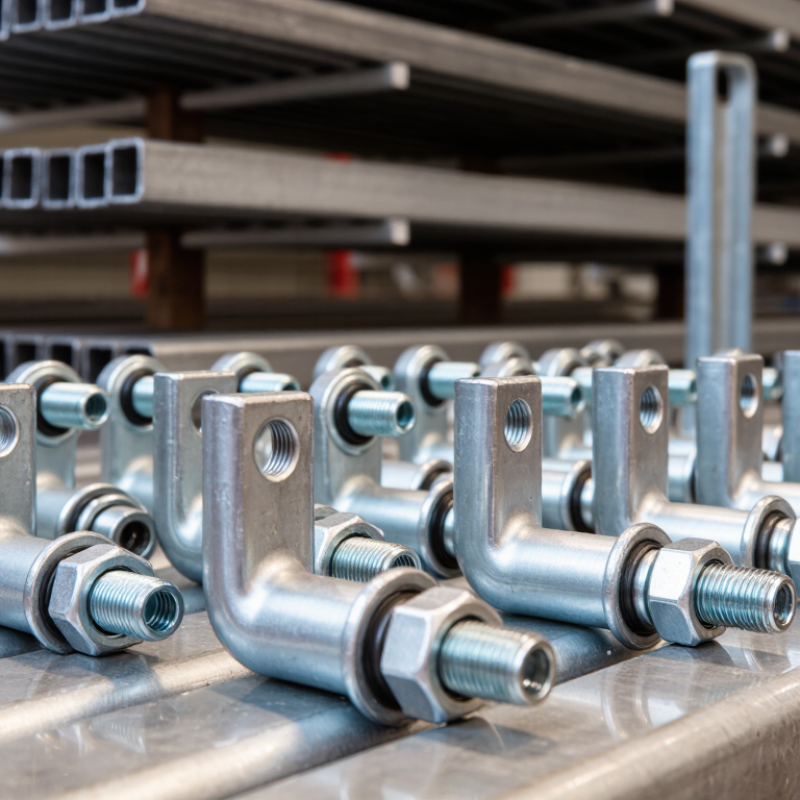
2026 Best Scaffold Fittings for Global Buyers
What Scaffold Fittings Are and How They Connect Scaffold Components
Scaffold fittings are the connectors that join tubes and help form a stable working structure. Common examples include right-angle couplers, swivel couplers, sleeve couplers, and base plates. Each has a specific job: a right-angle coupler joins crossing tubes, while a swivel coupler connects tubes at changing angles. Sleeve couplers link tube ends. Small parts, big consequences.
Connection quality affects how forces move through the scaffold. A loose or mismatched fitting can allow movement where the frame should remain rigid. OSHA has estimated that about 2.3 million construction workers regularly work on scaffolds, and scaffold-related incidents cause thousands of injuries annually. These figures underline why fitting condition, compatibility, and correct installation deserve attention. They do not replace a project-specific design or inspection.
Tips: Check fitting type and tube dimensions before assembly. Look for cracks, distortion, worn threads, and damaged locking parts. Confirm connections are secured according to the scaffold system’s instructions, then have a competent person inspect the completed structure. Even familiar fittings can be easy to overlook. Source: U.S. Occupational Safety and Health Administration, Scaffold Safety.
They connect scaffold tubes and help form a stable working structure. Small parts matter.
Right-angle couplers join crossing tubes. Swivel couplers connect tubes at changing angles, while sleeve couplers join tube ends.
Compare fitting dimensions with the tubes and project requirements. A fitting may look right but have different tolerances.
Look for cracks, distortion, worn threads, damaged locking parts, and chipped coatings. Check the jaws closely.
Steel fittings need suitable material quality and consistent dimensions. Aluminum fittings weigh less, but must suit the tube system and engineered requirements.
Use project-specific design information and verified technical documents. Never judge capacity by appearance or treat a design limit as permission to overload.
Ask for current drawings, batch identification, inspection records, and test documents linked to the actual production batch. Generic paperwork may miss problems.
Confirm production, inspection, and shipping dates in writing. Check packaging for moisture and loose parts; small shipping damage is easy to miss.
A competent person should inspect the structure before each work shift and after events that may affect its integrity. A tight-feeling coupler can still be misaligned.
This guide to 2026 Best Scaffold Fittings for Global Buyers explains how Scaffold Fittings connect standards, ledgers, braces, tubes, platforms, and other scaffold components to create stable and adaptable working structures. It introduces common types, including right-angle, swivel, sleeve, putlog, and beam fittings, while describing their typical applications in construction, maintenance, industrial access, and temporary support systems.
The article also examines material choices, corrosion resistance, load capacity, dimensional accuracy, and relevant safety expectations that influence fitting performance. Buyers will learn how to evaluate products according to project height, load requirements, working conditions, compatibility, installation efficiency, and inspection needs. Finally, it highlights important global sourcing factors for 2026, such as manufacturing consistency, quality documentation, packaging, delivery reliability, communication, and supplier evaluation. With these considerations, international purchasers can select Scaffold Fittings that support safer assembly, dependable performance, and efficient project management.

 AJ Metal