Buying a Scaffolding Fixed Clamp can look straightforward. It is not. A small fitting controls how securely two scaffold tubes connect, align, and carry forces. The wrong clamp may appear polished, yet fail to match the tube diameter, load requirement, or working environment. This guide introduces seven practical checks for making a safer, more informed purchase.
Scaffolding consultant David L. McKee offers a useful reminder: “A clamp is only reliable when its tube fit, tightening, and inspection are all correct.” That principle shapes every recommendation here. Buyers should examine clamp material, jaw design, bolt quality, corrosion resistance, stated load capacity, and compatibility with the scaffold system. Product certificates and manufacturer instructions matter. So does traceability.
Details matter.
Look closely at the threads. Check the nut movement. Inspect the casting for cracks, sharp edges, or uneven surfaces. A fixed clamp should grip firmly without crushing the tube. It should also maintain a stable right-angle connection during installation and use. Never rely only on appearance or a low price. I have seen purchasing decisions focus on unit cost while ignoring replacement rates, delivery delays, and inspection time. That approach seems efficient, but it can become expensive quickly.
These seven tips are not a substitute for competent engineering judgment or site inspection. Standards and requirements vary by location and project type. Still, they provide a practical starting point for comparing suppliers and products. The goal is simple: choose a Scaffolding Fixed Clamp that fits correctly, performs consistently, and arrives with evidence supporting its claimed quality. Mistakes are possible. Careful questions reduce them.
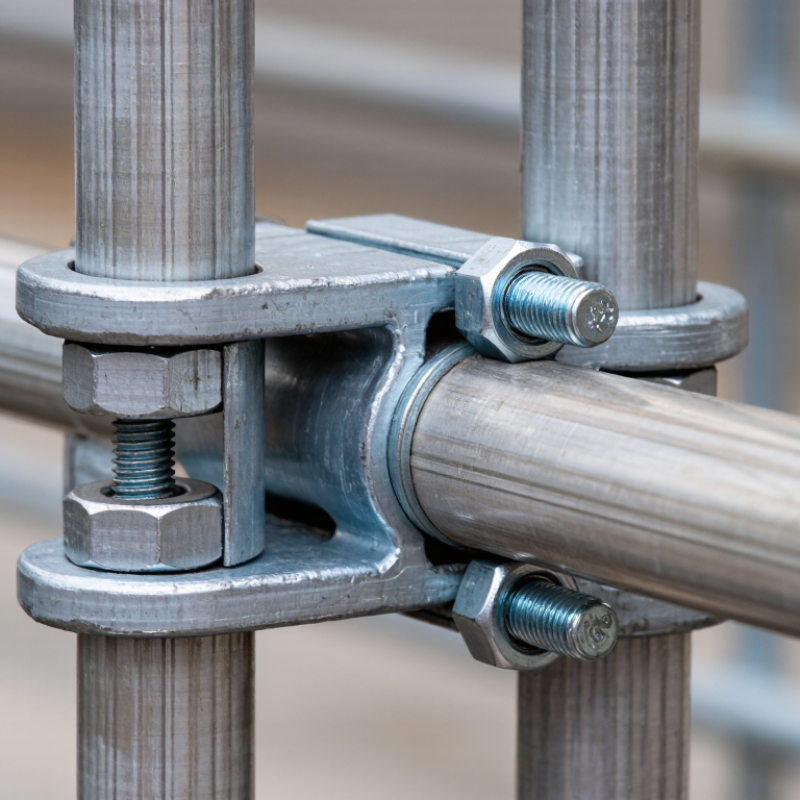
A fixed clamp, also called a right-angle coupler, joins two scaffold tubes at 90 degrees. It suits ledgers, transoms, guardrails, and rigid temporary frames. Swivel clamps allow angled connections, while sleeve clamps join tubes end to end. Choosing the wrong type can weaken the frame. It happens more often than buyers admit.
Buying decisions should follow seven practical checks. Confirm the tube diameter and steel compatibility. Check the clamp’s rated slip and load capacity. Request test records against EN 74-1 or an equivalent standard. Inspect the bolt, nut, and hinge for clean threads. Prefer corrosion-resistant finishes for wet or coastal sites. Examine the jaw contact area for sharp casting defects. Finally, verify inspection records and supplier traceability. Cheap hardware is rarely cheap after rework.
OSHA reports that scaffold-related incidents cause about 4,500 injuries and 50 deaths annually in the United States. That figure makes connection quality impossible to treat as a minor detail. On site, I check clamp alignment before tightening, then inspect for tube crushing or visible gaps. A torque wrench gives better consistency than guesswork, although field conditions can still distort results. Buyers should also consider repeated assembly, storage damage, and contamination from concrete dust. Product descriptions alone are not evidence; measured performance and documented testing matter more.
| Tip | What to Check | Common Clamp Type | Typical Application | Practical Buying Guidance |
|---|---|---|---|---|
| 1 | Confirm the connection angle | Fixed right-angle clamp | Joining two scaffold tubes at approximately 90 degrees for standards, ledgers, guardrails, and rectangular frames | Choose this type when the tube intersection must remain fixed and square. Use a swivel clamp when the required angle is not 90 degrees. |
| 2 | Match the tube outside diameter | Single-size or compatible-size fixed clamp | Steel tube scaffold systems using standardized tube diameters | Measure the actual tube outside diameter and verify the clamp range. A clamp that is too loose or too tight may not develop the intended grip. |
| 3 | Select suitable material and finish | Forged steel fixed clamp; galvanized or painted finish | General construction, maintenance, temporary structures, and outdoor work areas | Forged steel is commonly selected for structural scaffold connections. Galvanized finishes generally provide better resistance to outdoor moisture than untreated steel. |
| 4 | Check the fastener design | Bolt-and-nut fixed clamp | Connections requiring repeated assembly, inspection, and adjustment | Review bolt diameter, thread condition, nut retention, and washer arrangement. The fastening method should allow controlled tightening without damaging the tube. |
| 5 | Verify load and slip-resistance information | Load-rated right-angle clamp | Load-bearing scaffold joints, guardrail posts, ledgers, and braced assemblies | Ask for tested load, slip, and torque information where required. Do not estimate capacity from appearance alone; actual performance depends on tube condition, installation, and the complete scaffold design. |
| 6 | Consider the working environment | Corrosion-resistant fixed clamp | Coastal areas, damp sites, industrial facilities, and frequent outdoor installation | Select a finish appropriate for humidity, salt exposure, chemicals, and site handling. Inspect for coating damage, rust, deformation, and thread wear before reuse. |
| 7 | Review standards, traceability, and inspection needs | Documented scaffold fixed clamp | Commercial projects, regulated work sites, rental fleets, and repeated-use inventories | Request material details, dimensional data, test records, and applicable compliance documentation. Establish an inspection and replacement procedure before site deployment. |
| Clamp Type | Connection Geometry | Main Function | Best-Fit Use | Important Limitation |
|---|---|---|---|---|
| Right-Angle Fixed Clamp | Fixed connection at about 90 degrees | Creates a rigid intersection between two tubes | Standards and ledgers, guardrails, working platforms, and rectangular scaffold bays | It is not intended for connections that require a continuously adjustable angle. |
| Swivel Clamp | Adjustable angle connection | Connects tubes used for diagonal bracing or irregular layouts | Cross-bracing, raking shores, sloped structures, and non-square scaffold arrangements | It may not provide the same fixed 90-degree positioning as a right-angle clamp. |
| Putlog or Single Clamp | Tube-to-ledger or tube-to-support connection | Supports a scaffold tube or board-support member from a main tube | Traditional tube-and-fitting scaffolds where putlogs or transoms are attached to ledgers | Its use and allowable loading depend on the scaffold system and applicable local requirements. |
| Beam or Girder Clamp | Tube-to-steel-beam connection | Attaches scaffold tubes to structural steel without drilling or welding | Temporary access platforms, edge protection, and maintenance work around steel structures | It must be selected for the beam profile, flange thickness, tube size, and required load direction. |
Safety note: Clamp selection should be based on the complete scaffold design, applicable local regulations, manufacturer instructions, and inspection by a competent person. Never use a clamp with visible cracks, severe corrosion, damaged threads, distorted jaws, or an uncertain load history.
Forged steel usually provides reliable toughness under repeated loading. Avoid poorly cast metal with cracks near the bolt housing.
Check for deep rust pits, damaged threads, rough edges, and dirty holes. Small flaws can worsen after repeated assembly.
The component should support its own weight and at least four times the maximum intended load, where applicable.
Request traceable reports showing material grade, batch number, slip resistance, breaking load, and inspection methods.
Clean the tube first. Measure its outside diameter with a calibrated vernier caliper at three points.
These readings reveal oval sections, dents, or local wear. I once checked only one clean area and missed deformation.
No. Excessive tightening may damage the tube or distort the clamp. Confirm the stated tube range and torque guidance.
Inspect under bright light for peeling, deep scratches, uneven coating, and red rust around the bolt or jaw.
No. Alignment, torque, tube condition, spacing, and load direction also matter. The connection can still fail.
Inspection should occur before use and after impacts, severe weather, movement, or other events affecting structural integrity. Do not guess.
Choosing the right Scaffolding Fixed Clamp is essential for building a stable and reliable scaffold system. Start by understanding the different clamp types and their intended applications, then confirm that the clamp is made from strong, durable materials with sufficient load-bearing capacity. Carefully measure the scaffold tubes to ensure the clamp fits securely and is compatible with the tube diameter. A proper fit helps prevent movement, misalignment, and unnecessary stress during use.
Safety should also guide your purchasing decision. Evaluate the clamp’s compliance with recognized safety standards, surface finish, corrosion resistance, and long-term durability. Finally, compare suppliers based on price, product consistency, warranty terms, customer support, and available certifications. The lowest price is not always the best value, especially when quality and worker safety are involved. By reviewing these factors systematically, buyers can select a dependable Scaffolding Fixed Clamp that supports efficient installation, stable connections, and long-term scaffold performance.

 AJ Metal