Safe scaffolding begins with small components that carry serious responsibility. Scaffolding Clamps connect tubes, stabilize frames, and help workers maintain secure platforms above ground. A loose fitting can create movement, uneven loading, or a dangerous shift during daily work.
This guide examines ten reliable clamps for construction projects, maintenance tasks, and temporary access systems. It considers material strength, fitting accuracy, corrosion resistance, load performance, and installation practicality. It also looks at swivel, fixed, sleeve, and beam-style designs. Each type serves a different structural purpose. Choosing the wrong clamp can weaken an otherwise well-planned scaffold.
Details matter.
Experienced crews check tube diameter, clamp condition, bolt threads, and contact surfaces before assembly. They also follow the scaffold manufacturer’s instructions and applicable workplace requirements. Independent inspection remains important, especially after strong winds, impact, alteration, or extended use. Product descriptions alone cannot prove real-world safety.
Some clamps appear similar but perform differently under changing angles or repeated loads. A low price may hide poor galvanizing, inconsistent casting, or difficult tightening. Even respected products require correct installation. No clamp can compensate for damaged tubes or careless assembly.
This review is designed to support informed purchasing and practical site decisions. It does not replace competent engineering judgment or formal inspection. The comparisons may also have limits because supplier data, testing methods, and site conditions vary. That uncertainty deserves attention. Reliable construction depends on suitable equipment, trained workers, and repeated checks—not a product name alone.
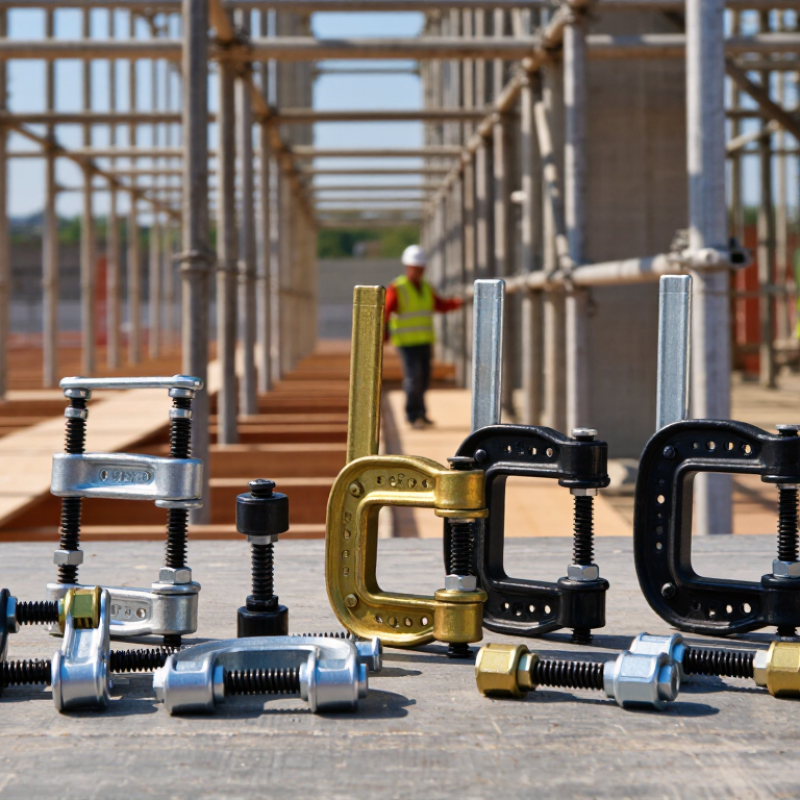
Scaffolding clamps connect tubes, stabilize frames, and help crews adapt structures to uneven work areas. Choosing the correct type matters as much as tightening it correctly.
Right-angle couplers join two tubes at a fixed 90-degree angle. They are widely used for guardrails, ledgers, and rectangular scaffold bays. Swivel couplers connect tubes at changing angles, making them useful for bracing, stair towers, and irregular building shapes. Sleeve couplers join tubes end to end when a longer rail or standard is required. Their connection must stay aligned, or the scaffold may develop unwanted movement.
Putlog clamps support scaffold tubes against structural edges or beams during temporary platform arrangements. Beam clamps attach compatible tubes to steel members, but they require careful checks for load direction and flange thickness. Some systems also use base clamps to secure vertical tubes near the ground. That detail is easy to overlook. It should not be.
Before installation, inspect each clamp for cracks, distortion, damaged threads, and heavy corrosion. Confirm tube diameter and clamp compatibility. Clean contact surfaces when dirt or paint reduces grip. Tighten according to the manufacturer’s specified method, not personal strength. No clamp is foolproof. A rushed inspection, an incorrect angle, or a missing brace can weaken an otherwise professional setup. A competent person should verify the completed scaffold before use and after major changes, impact, or severe weather.
Selecting the right scaffolding clamp starts with the applicable safety standard, not its appearance.
Requirements differ by location, so check the current edition of local regulations and approved technical standards.
EN 74, AS/NZS 1576, and OSHA guidance may apply in different markets.
Do not assume one certificate covers every project.
A reliable clamp should carry clear markings, traceable documentation, and a stated load capacity.
Inspect the body, threads, bolts, and contact surfaces before installation.
Look for cracks, heavy corrosion, distorted jaws, or missing washers.
Reject doubtful parts.
It is cheaper than repairing a collapse.
Fit matters just as much as strength.
The clamp must match the tube diameter and intended connection, such as a right-angle, swivel, or sleeve joint.
Tighten it with the specified method, rather than guessing by feel. Over-tightening can damage the tube. Under-tightening may allow slipping under movement or vibration.
That detail is often missed.
Competent workers should inspect assembled connections at the start of each shift and after severe weather, impact, or alteration.
Keep inspection records with the scaffold plan and load information.
A small weakness can hide behind fresh paint.
I would also question “universal” claims unless independent test evidence supports them.
Standards change, and site habits do too.
Safety decisions need current evidence, not confidence alone.
Choosing the best scaffolding clamp depends on the structure, load path, and working environment.
A fixed right-angle clamp suits repeated 90-degree frames and stable access towers. A swivel clamp handles changing angles, useful on sloped roofs or irregular façades. Sleeve couplers connect scaffold tubes end to end, while putlog clamps support transoms against ledgers.
Beam clamps can help create temporary support points, but only after an engineer confirms the beam’s capacity.
Safety margins matter. The U.S. Bureau of Labor Statistics recorded 1,069 construction deaths in 2022, including 395 fatal falls.
Those figures make small connection details impossible to dismiss. OSHA 29 CFR 1926.451 requires scaffold components to support their intended loads, while EN 74-1 classifies couplers by performance and testing requirements.
Select clamps with verified slip resistance, compatible tube diameters, corrosion protection, and visible load ratings. A clamp that fits loosely can rotate under movement.
Field checks should include bolt condition, jaw alignment, tube contact, and torque control. Keep it simple. Do not mix unverified components.
A rigid clamp is not always the better choice; it can transfer unwanted stress when the scaffold shifts slightly. That assumption needs review.
Weather, vibration, repeated assembly, and imperfect tube surfaces can change performance. Inspection records, competent-person approval, and manufacturer test documentation provide stronger evidence than appearance alone.
Choosing among the 10 best scaffolding clamps requires more than checking the advertised price. Load capacity, material strength, and tube compatibility determine whether a connection remains stable under real site conditions. OSHA 29 CFR 1926.451 requires scaffolds to support their own weight plus at least four times the maximum intended load. That margin includes workers, tools, stored materials, and movement.
HSE’s 2023/24 workplace statistics recorded 51 worker deaths from falls from height in Great Britain. Clamps cannot prevent every incident, but poor connections increase avoidable risk. Inspect the clamp body for cracks, distorted threads, corrosion, and incomplete jaw contact. A steel clamp may suit heavy-duty frames, while galvanized finishes can improve corrosion resistance outdoors. Aluminum is lighter, but its lower stiffness may not suit every load path.
Compatibility is often overlooked. Measure the outside diameter of every tube, not just the nominal size. Couplers should match the tube profile and maintain full contact around the surface. Swivel clamps help form angled braces, while fixed clamps provide stronger alignment for straight runs. Check the manufacturer’s tested load rating, bolt grade, tightening method, and inspection interval. I have seen teams trust a familiar clamp without checking mixed tube materials. That assumption is risky. Field conditions are rarely perfect. When records are incomplete, a competent scaffold engineer should verify the connection before loading it.
Sources: OSHA, 29 CFR 1926.451; UK Health and Safety Executive, Workplace fatal injuries in Great Britain, 2023/24.
10 Best Scaffolding Clamps for Safe Construction Projects
Choosing scaffolding clamps starts with compatibility, not appearance. Select clamps that match the tube diameter, load requirements, and intended connection. Swivel clamps suit angled braces, while fixed clamps support right-angle joints. Always check certified load information and follow the supplier’s installation instructions. A clamp that feels tight may still be unsafe.
Installation needs clean contact surfaces. Remove mud, paint buildup, and loose corrosion from tubes before fitting. Position the clamp fully around both tubes, then tighten it evenly with a calibrated tool. Do not force damaged threads. Never mix incompatible tube sizes. Keep the joint aligned, because a tilted connection can create unexpected movement. Small details matter.
Inspection should happen before each work shift and after strong winds, impacts, or scaffold changes. Look for cracked housings, distorted jaws, missing bolts, thread damage, and rust near load-bearing areas. Mark questionable clamps and remove them from service. Maintenance crews should clean, dry, and store clamps off the ground. Keep inspection records with dates and corrective actions. Records expose repeated problems.
A rushed installation still happens on busy sites. That is worth challenging. Workers may trust familiar equipment too much, especially when the clamp looks normal. Supervisors should verify torque practices, access conditions, and worker training through practical checks. Replace questionable hardware rather than attempting uncertain repairs. Safety decisions should remain conservative, even when production pressure increases.
Comparative selection guide based on common scaffold applications, adjustability, and inspection suitability. Scores are practical planning ratings, not certified load capacities.
Fixed-angle and swivel couplers are commonly used to connect 48.3 mm scaffold tubes, while sleeve, putlog, base, beam, and board-retaining clamps support specific construction tasks. Before every shift, a competent person should check for cracks, deformation, corrosion, missing fasteners, poor tube engagement, and unauthorized modifications. Reinspect after impact, severe weather, alteration, or any event that could affect stability, and follow the applicable standard and the clamp manufacturer’s instructions.
It joins two tubes at 90 degrees for guardrails, ledgers, and rectangular scaffold bays. The joint must stay aligned.
Use it for angled braces, stair towers, and irregular building shapes. It supports changing tube angles.
It connects tubes end to end when a longer rail or standard is needed. Alignment is essential.
Putlog clamps support tubes near structural edges. Beam clamps attach compatible tubes to steel members. Base clamps secure vertical tubes near ground level.
Check tube diameter, connection type, load information, and installation instructions. Never mix incompatible tube sizes.
Look for cracks, distortion, damaged threads, missing washers, and heavy corrosion. A clean surface matters.
Tighten it using the specified method and a suitable calibrated tool. Personal strength is not a reliable measurement.
Inspect it before every shift and after severe weather, impacts, or structural changes. Keep dated records.
Mark it and remove it from service. Do not rely on uncertain repairs or fresh paint.
A competent person should check the structure, load information, access, and bracing before use. No clamp is foolproof.
This guide explores the essential role of Scaffolding Clamps in creating stable, secure, and efficient construction structures. It explains the main types, including fixed-angle, swivel, sleeve, and beam clamps, and describes how each supports different scaffolding layouts and project requirements. Readers will also learn how to evaluate clamps according to recognized safety standards, load capacity, material quality, corrosion resistance, and compatibility with scaffold tubes and fittings. By comparing options for general construction, complex configurations, heavy-duty work, and temporary access systems, the guide helps users make practical and informed selections.
The article also presents best practices for installation, inspection, and ongoing maintenance. Proper tightening, accurate alignment, routine checks for wear or deformation, and timely replacement of damaged components are essential for reducing structural risks. With careful planning and regular supervision, the right Scaffolding Clamps can improve stability, worker safety, and overall project performance.

AJ Metal