Choosing the right Scaffolding Connector is more than matching two tubes. It affects stability, load transfer, assembly speed, and worker confidence. A connector that looks strong may still fail when its diameter, material, or locking method does not suit the scaffold system.
Experienced scaffold teams usually begin with the working conditions. They examine tube sizes, expected loads, exposure to rain or chemicals, and the required movement at each joint. A fixed-angle connector may suit a straight frame, while a swivel connector can support changing angles. Sleeve connectors help extend tubes, but only when the connection length and locking method are appropriate. Small details matter. A loose fitting can create movement that workers notice underfoot.
Reliable selection also depends on traceable product information. Check the manufacturer’s specifications, rated capacity, compatible tube dimensions, and inspection guidance. Local regulations and project requirements should guide the final decision. A qualified professional should review unusual loads, suspended platforms, or complex structures. Never rely on appearance alone. It is not enough.
In practice, mistakes often begin with rushed purchasing or mixed components from different systems. Even experienced crews can overlook corrosion beneath a coating or damage around a bolt hole. This guide compares connector types, materials, joint functions, and inspection points. It also acknowledges an uncomfortable truth: no connector is ideal for every site. Careful judgment remains essential. The safest choice balances engineering evidence, installation experience, and consistent inspection, rather than chasing the cheapest option.
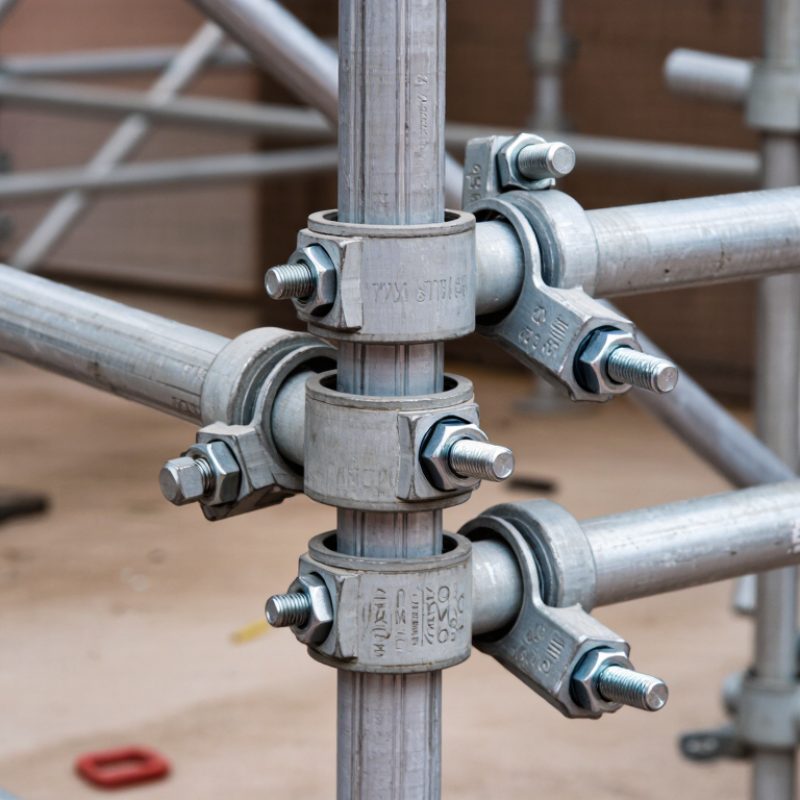
Types of Scaffolding Connectors and Their Common Applications
How to Choose the Best Scaffolding Connector?
Scaffolding connectors join tubes and control the structure’s shape, strength, and stability. The right type depends on the joint, load, tube diameter, and working environment. A right-angle coupler creates a fixed 90-degree connection. It suits standard ledgers, transoms, and upright frames. A swivel coupler allows variable angles, making it useful for bracing on uneven façades or irregular structures. It offers flexibility, but poor tightening can reduce reliability.
Sleeve connectors join two tubes end to end. They are common when longer uprights or rails are required. Putlog or single couplers attach a tube to a supporting member, often for temporary platform support. Base jacks and adjustable connectors help level scaffolding on surfaces with small height differences. They should not compensate for unstable ground. That shortcut can become dangerous.
Selection should begin with a load assessment and a check of compatible tube sizes. Inspect threads, pins, jaws, and corrosion before installation. Clean contact surfaces matter. Even a strong connector may slip when dirt or paint prevents full contact. Follow the applicable local standard and the connector manufacturer’s instructions. A competent person should verify alignment, tightening, bracing, and access points. In practice, workers sometimes choose connectors by habit. That saves minutes, perhaps, but it may create an unsuitable joint. Rechecking the angle and expected load is a better habit. Simple decisions deserve careful judgment.
Key Factors for Evaluating Connector Strength and Compatibility
How to Choose the Best Scaffolding Connector?
Connector strength begins with the complete load path, not the fitting alone. Check tube diameter, wall thickness, steel grade, and connection angle together. A connector must resist slipping, rotation, and local tube crushing. OSHA 29 CFR 1926.451 requires scaffolds and components to support their own weight plus four times the maximum intended load. That requirement is a baseline, not a substitute for engineering review. Ask for independent test results, rated loads, and the exact testing method.
Compatibility also depends on the worksite. Measure the tubes with a calibrated tool; painted or corroded surfaces can change the effective grip. Inspect threads, jaws, pins, and contact faces before installation. A small mismatch may look harmless. It is not. EN 74 testing classifications can help compare couplers, but only when the connector matches the relevant tube system and loading direction. Never assume similar-looking fittings perform similarly.
Field experience matters. I once focused too heavily on published strength and overlooked repeated impact damage near a joint. That was a useful correction. HSE’s Health and Safety Statistics 2023 to 2024 recorded 50 worker deaths from falls from height in Great Britain, reinforcing the need for disciplined inspection. Select connectors with traceable certificates, corrosion resistance, clear markings, and practical installation controls. Recheck connections after relocation, heavy weather, or unusual loading. Some specifications remain incomplete. Pause and verify them.
How to Choose the Best Scaffolding Connector?
Key factors for evaluating connector strength and compatibility
This screening model prioritizes structural performance and dimensional fit. Strength should be verified through the connector's declared test data, while compatibility should be checked against the tube outside diameter, wall thickness, connector angle, and applicable local scaffold standards. A nominal 48.3 mm tube outside diameter is widely used in steel tube-and-fitting scaffold systems, but exact dimensions must always be confirmed before installation.
How to Match Connectors With Scaffolding Materials and Structures
How to Choose the Best Scaffolding Connector?
Choosing a scaffolding connector starts with matching it to the material and structure. Steel tubes usually need connectors with compatible tube diameters and strong clamping surfaces. Aluminum requires lighter fittings that avoid crushing the softer metal. Mixed-metal connections also deserve attention, because moisture can accelerate corrosion between dissimilar materials.
Study the structure before selecting the fitting. Fixed connectors suit straight, stable joints, while swivel connectors help form braces and irregular angles. For platforms, inspect the tube layout, expected loads, and connection direction. A connector may look secure but still transfer force poorly. In field inspections, small gaps around a clamp often reveal incorrect sizing or uneven tightening. Do not force a fitting onto a mismatched tube. That shortcut can damage the tube and reduce stability.
Tips: Check the tube diameter first. Confirm the connector’s rated load and material compatibility. Use the correct wrench, then inspect the joint after loading. Look for slipping, distortion, rust, or unusual movement. A clean connection is not always a safe connection. Recheck it after weather changes or structural adjustments. I have seen careful installations fail because the supporting surface was overlooked. This step is easy to miss. It deserves more attention. Always follow the relevant technical standards and the manufacturer’s installation requirements for the selected connector.
Safety Standards, Load Capacity, and Quality Inspection Requirements
How to Choose the Best Scaffolding Connector?
A reliable scaffolding connector should meet the safety standard required for your project and location. Check documented compliance with applicable standards, such as EN 74, before purchasing. Standards alone are not enough. The connector must also match the scaffold tube diameter, wall thickness, and connection type.
Load capacity deserves careful attention. Ask for tested values, not general claims. Capacity can change with the connector angle, bolt tightening, tube condition, and installation quality. A right-angle coupler may perform differently from a swivel coupler under the same force. Do not guess. Follow the manufacturer’s specified torque and the engineer’s design calculations. A connector that feels tight may still slip under repeated loading or vibration.
Quality inspection should begin before delivery. Check batch records, material certificates, dimensions, bolt threads, welds, and surface protection. Look for cracks, distortion, deep rust, or damaged jaws. Reject questionable pieces. On site, inspect connectors before each installation and after severe weather or impact. A competent inspector should record findings and remove defective items from service. One practical lesson is easy to miss: clean components are easier to inspect accurately. Dirt can hide wear. I would also review whether the inspection method is realistic for busy crews; a perfect checklist is useless when nobody completes it. Load testing and independent laboratory reports provide stronger evidence than appearance alone.
A Step-by-Step Process for Selecting the Right Scaffolding Connector
How to Choose the Best Scaffolding Connector?
Selecting the right scaffolding connector should follow a clear, field-based process. I begin by identifying the tube diameter, wall thickness, connection angle, and expected load. A swivel connector suits changing angles, while a fixed connector supports consistent 90-degree joints. Small mismatches matter. A loose fit can create movement before workers notice it.
Next, check the load path, corrosion condition, locking mechanism, and installation space. The connector must match the scaffold system and the project’s design calculations. I compare test certificates with recognized requirements, such as EN 74-1, and follow the manufacturer’s installation limits. OSHA reports that scaffolding accidents affect about 4,500 workers and cause roughly 50 deaths annually in the United States. These figures show why visual confidence is not enough.
Inspect every connector before use. Look for cracked castings, distorted jaws, missing pins, damaged threads, and heavy rust around contact surfaces. Confirm that the connection closes fully and receives the specified tightening force. A competent person should verify the completed assembly, especially near platforms, braces, and loading points. I have seen teams focus on connector strength while overlooking uneven ground. That is a mistake worth admitting. The best connector cannot correct poor base preparation, excessive loading, or an unclear load path. Recheck after relocation or severe weather. Conditions change.
FAQS
It joins tubes and helps control the scaffold’s shape, strength, and stability. Small parts matter.
Use it for fixed 90-degree joints, such as ledgers, transoms, and upright frames. Check the tube size first.
It connects tubes at changing angles, especially for bracing uneven façades or irregular structures. Poor tightening can reduce reliability.
Sleeve connectors join tubes end to end. They help create longer uprights or rails, but alignment still needs checking.
No. Base jacks can level small height differences, but they cannot make weak ground safe. That shortcut is dangerous.
Assess the expected load, tube diameter, wall thickness, joint type, and working environment. Habit is not a design method.
Check threads, pins, jaws, welds, dimensions, corrosion, and distortion. Clean contact surfaces carefully.
No. Confirm applicable standard compliance, tested load values, material records, and independent evidence when available. Appearance can mislead.
Yes. Angle, vibration, tube condition, and incorrect torque can cause slipping. Follow specified tightening requirements.
Inspect them before installation and after severe weather or impact. Record findings and remove damaged pieces from service.
A competent person should check alignment, tightening, bracing, access points, and expected loads. Busy crews may miss details.
Choosing connectors by habit can create unsuitable joints. Recheck the angle and load, even when the job seems routine.
Conclusion
Choosing the best Scaffolding Connector requires more than selecting a standard fitting. Different connector types serve different purposes, including joining tubes, creating right-angle intersections, forming adjustable connections, and supporting specialized scaffold structures. The selection process should consider connector strength, dimensional compatibility, connection stability, and the materials used in both the connector and scaffold. Matching the fitting to the structure helps ensure reliable performance under expected working conditions.
Safety should remain the central priority. Before use, verify the connector’s rated load capacity, applicable safety standards, corrosion resistance, manufacturing quality, and inspection records. Check for deformation, cracks, damaged threads, excessive wear, or other defects, and remove unsuitable components from service. A practical selection process includes identifying the scaffold design, calculating anticipated loads, confirming tube dimensions and materials, comparing connector performance requirements, and completing a final quality inspection. This systematic approach supports a stable, efficient, and safer scaffolding system.

 AJ Metal