China’s scaffold manufacturing sector has expanded rapidly, but product quality still deserves careful inspection. This guide introduces China’s Top 10 Scaffold Steel Plank Manufacturers through practical, safety-focused criteria. The list is not an absolute verdict. No ranking is perfect.
A reliable Scaffold Steel Plank should show consistent dimensions, strong welds, stable ribbing, and dependable surface protection. Inspectors should examine plank thickness, loading data, slip resistance, drainage holes, and edge deformation. Galvanizing quality matters, especially on humid construction sites where rust can begin around cut edges. Factory testing, traceable materials, and documented quality controls also reveal a manufacturer’s real capability.
Dr. John W. Hinze, a widely cited construction-safety researcher, said, “Safety must be managed, not assumed.” His warning fits scaffold procurement closely. A plank may look solid under warehouse lighting, yet perform differently after repeated loading, transport damage, or poor storage. That uncomfortable detail is easy to overlook.
The manufacturers discussed here are considered through production experience, export capability, engineering support, certifications, and customer feedback. Attention also goes to customization, including plank length, hook design, perforation patterns, and galvanized finishes. Standards such as EN 12811-1, AS/NZS 1576, and relevant local requirements can support comparison, but certificates alone do not prove every shipment is flawless.
Buyers should request current test reports and inspect samples before placing large orders. Ask difficult questions. Check the details. The strongest supplier is not always the cheapest one; it is the company that can repeatedly deliver safe, consistent Scaffold Steel Plank products under real construction conditions.
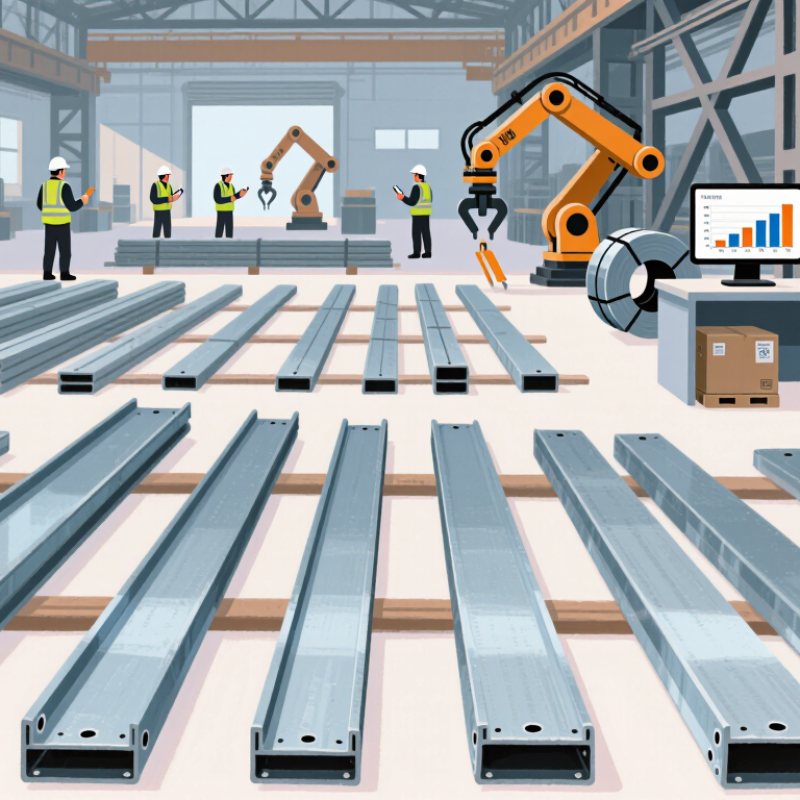
China Top 10 Scaffold Steel Plank Manufacturers
China’s scaffold steel plank industry benefits from a large, integrated steel supply chain. The World Steel Association reported that China produced about 1,005 million tonnes of crude steel in 2024. This capacity supports stable access to galvanized sheets, punched components, and welding materials. However, production volume alone can mislead. Plank quality depends on steel grade, forming accuracy, weld penetration, and corrosion control.
Manufacturers serving construction projects usually focus on load-bearing design, anti-slip surfaces, drainage holes, and dimensional consistency. Factory evaluations should review material certificates, welding inspection records, coating thickness, and batch traceability. Testing should follow applicable national or project standards, with clear evidence for working loads and deflection limits. The EN 12811-1 framework is often referenced internationally for temporary works performance. Chinese projects may also require compliance with local construction safety standards. Requirements differ.
Tips: Request a recent test report, sample several planks, and measure surface flatness. Check whether end hooks fit the intended frame without excessive movement. A clean coating is useful, but hidden weld defects matter more. Ask for corrective-action records, not only promotional specifications.
China’s leading manufacturers increasingly use automated punching, robotic welding, and continuous galvanizing lines. These methods improve repeatability, yet they do not remove inspection risks. Independent sampling remains valuable. Buyers should compare usable load, service life, packaging protection, and replacement support rather than price alone. A cheaper plank may create higher handling costs. That is easy to overlook.
Its large steel supply chain supports access to galvanized sheets, punched parts, and welding materials. Production scale helps, but it does not guarantee quality.
Check steel thickness, plank width, hook shape, perforation pattern, and surface flatness. Look for blocked holes, sharp edges, and uneven hooks. Small faults matter.
Request material certificates, welding procedures, coating records, and batch-linked test reports. Generic documents are not enough. Ask for corrective-action records.
Order an independent load test using the exact plank model. Confirm span, load position, deflection, and failure results. Test the real product.
Poor weld penetration can weaken a plank under repeated loading. Damaged or thin coatings may accelerate corrosion. Clean surfaces can still hide weld defects.
Review coil storage, cutting accuracy, welding consistency, galvanizing control, and final inspection. Measure several samples with a caliper. Do not trust appearance alone.
Planks should arrive dry, tightly bundled, and protected from impact. Bent hooks or scratched coatings can create installation and replacement problems. Packaging is easy to underestimate.
Not automatically. A lower price may reflect thinner steel, weaker welds, or limited replacement support. Compare usable load, service life, lead time, and inspection records.
A capable supplier answers technical questions clearly and admits product limits. Be cautious when every answer sounds perfect. No checklist is flawless.
Sample several planks, check frame fit, review batch traceability, and confirm test evidence. Record defects and replacement procedures. I might still miss something. Recheck critical details.
China’s scaffold steel plank manufacturing industry combines large-scale production, competitive pricing, and increasingly advanced quality-control systems. This article explains how the sector has developed, including common manufacturing processes, material selection, surface treatments, load-bearing design, and export capabilities. It also introduces practical methods for evaluating leading manufacturers, such as reviewing production capacity, testing procedures, technical expertise, certifications, customization services, and experience with international orders.
The comparison of the top 10 Chinese manufacturers focuses on product quality, compliance with applicable safety standards, manufacturing flexibility, delivery reliability, and overall service performance, without promoting any specific brand. Readers will also learn how to assess a supplier’s Scaffold Steel Plank specifications, welding quality, dimensional accuracy, corrosion resistance, packaging, and after-sales support. By considering these factors together with communication efficiency, transparent documentation, and total purchasing costs, buyers can make more informed decisions and select a dependable Chinese supplier for safe, durable, and cost-effective scaffolding projects.

 AJ Metal