The construction industry recognizes the importance of safety when using scaffolding ladders. According to a recent report by the National Institute for Occupational Safety and Health (NIOSH), improper use of ladders leads to over 20,000 injuries annually. Thus, mastering the safe usage of a scaffolding ladder is essential for professionals in the field.
Expert John M. Hawkins, a renowned safety consultant, emphasizes, “Using the right scaffolding ladder techniques can save lives.” His insights highlight the necessity of understanding equipment features and adhering to safety protocols. The right approach to scaffolding ladders not only enhances productivity but significantly reduces the risk of accidents on site.
Many users underestimate the risks associated with improper ladder usage. They may overlook crucial aspects like weight limits or stability checks. These oversights can lead to severe consequences. It’s critical to be aware of best practices and common pitfalls when selecting and using a scaffolding ladder. Safety should always come first in any construction environment.
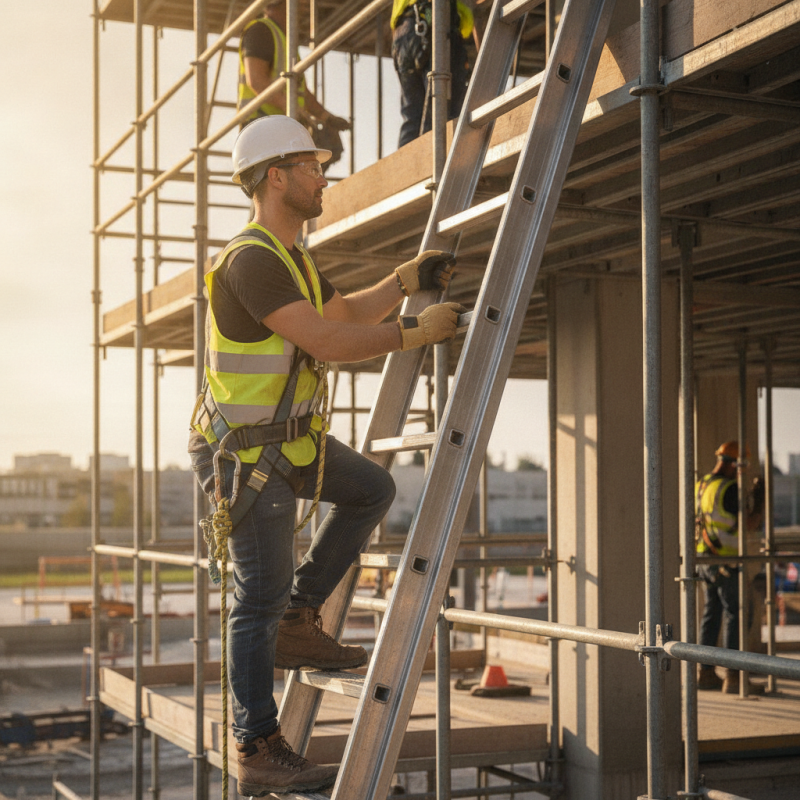
Safety is paramount when using scaffolding ladders. According to the Occupational Safety and Health Administration (OSHA), falls account for over 30% of construction-related injuries. Choosing the right ladder and using it correctly can significantly reduce these risks. A study indicated that improper ladder usage increases the chance of accidents by 50%.
When selecting a scaffolding ladder, check its load capacity. Many accidents happen because ladders are overloaded. Ensure your ladder fits the task at hand. It’s best to avoid makeshift solutions. Investing in high-quality equipment pays off in the long run.
Always inspect the ladder before use. Look for cracks or loose parts. A small oversight can lead to serious injuries. Secure the ladder properly to prevent slipping. Remember, using a ladder correctly is not just a recommendation; it’s a necessity. Stay focused on safety. These practices can save lives in your workplace.
| Tip Number | Tip | Importance | Best Practice |
|---|---|---|---|
| 1 | Inspect Your Ladder Regularly | Ensures structural integrity | Check for cracks or defects before use |
| 2 | Choose the Right Height | Reduces risk of falls | Select a ladder that reaches your work area comfortably |
| 3 | Use on Stable Ground | Prevents tipping over | Place ladder on flat, even surfaces |
| 4 | Maintain Three Points of Contact | Enhances balance | Keep two hands and one foot, or two feet and one hand on the ladder |
| 5 | Don’t Overreach | Avoids accidental falls | Keep your body centered while climbing |
| 6 | Use Proper Ladder Angle | Maximizes stability | Follow the 4-to-1 rule: for every 4 feet high, place the base 1 foot away |
| 7 | Keep Ladder Clear of Hazards | Prevents accidents | Ensure no tools or materials are in the way |
| 8 | Use Ladders Designed for Your Task | Enhances safety and efficiency | Choose ladders rated for the weight they will carry |
| 9 | Secure Your Ladder | Helps prevent accidents | Use stabilizers or anti-slip feet |
| 10 | Get Training If Possible | Improves safety awareness | Attend workshops on ladder safety |
: Safety gear reduces the risk of injuries from falls, which account for a significant portion of ladder-related incidents.
Non-slip work boots are essential for providing grip on different surfaces and preventing slips.
Harnesses can reduce fall injuries by 44%, keeping workers secure on elevated platforms and during climbs.
Key PPE includes safety goggles for eye protection, gloves for grip, and hard hats to protect against falling objects.
Each ladder must be inspected for wear or damage, ensuring it's stable and suitable for the task.
Ensure the base is stable on level ground. Use ladders that exceed the required height to avoid overreach.
Always maintain three points of contact while climbing to minimize fall risks.
Avoid carrying heavy materials; use a material hoist instead to maintain balance and safety.
Ensuring every worker is equipped with the right safety gear and adhering to guidelines is key for a safe environment.
Underestimating the necessary height can lead to dangerous overreach and potential falls.
The article "Top 10 Scaffolding Ladder Tips for Safe Usage and Choosing" emphasizes the critical importance of safety when working with scaffolding ladders. It outlines essential features to consider when selecting a scaffolding ladder, ensuring that it meets safety standards and supports the user's needs. Additionally, the article highlights the necessity of wearing appropriate safety gear, such as helmets and harnesses, to protect against falls and injuries.
Best practices for setting up and climbing scaffolding ladders are also discussed, providing insights into maintaining stability and balance. Furthermore, it points out common mistakes that users often make, such as overreaching or failing to inspect the ladder before use. By following these guidelines, users can significantly enhance their safety and efficiency while working with scaffolding ladders.

 AJ Metal